Why You Would Need State of the Art Graphics Card?
If y'all look at the world of PC graphics from the perspective of the consumer, nosotros are forced to conclude that last year was a bit of a let-downward. Let's be articulate, the current crop of graphics cards are the best we accept ever seen, and in particular the GeForce GTX 1080 is a peach of a GPU. However, that is only role of the story. [Opinion] It is worth pointing out that during this look back at the events of 2017 we are sticking with PC graphics. In the world of Apple Mac, at that place accept been significant moves with iMac, iMac Pro and the latest AMD graphics.Nonetheless, nosotros are putting Apple to one side. Anyone who bought a new iMac in 2017 and uses Terminal Cut Pro has a good reason to feel smug and self-satisfied, which but adds to our pain. Over in the Land of PCs where we use Adobe Premiere or DaVinci Resolve, it is a different story every bit we are obliged to buy a graphics card to share some of the CPU workload. This leads on to the question of which graphics chip you buy, followed by the make and model of the graphics bill of fare. Gamers get hung up on the precise clock speeds of the GPU and its memory, so they can fine-tune the paradigm quality settings of their games. By contrast, video editing hurls a workload at the PC of such a magnitude that the CPU and GPU must exist able to crunch through the work as fast equally possible. Once you lot have a decent graphics card (say a GTX 1080) in your video editing car yous will simply run across a small benefit from installing a improve graphics menu (say a GTX 1080 Ti), whereas a move from a quad-core CPU to viii cores is a game changer. The fundamental problem for the consumer is that Nvidia has recently overshadowed AMD in the graphics market, stymying competition to the extent that product development has slowed and prices remain uncomfortably high. If you lot cast your heed dorsum 3 years to belatedly 2014, you may recall the launch of GTX 980, which was a damn fine graphics chip. Nvidia rolled out the x-series in 2016 and it's arguable that nosotros haven't seen any significant progress since then. The GTX 1080 is a die shrink of the GTX 980 (28nm downward to 16nm), which means it crams in many more shaders and is able to run at much higher clock speeds. There are other changes, such every bit the move from GDDR5 retention to GDDR5X and the revised GPU compressing data more efficiently to allow greater throughput. Counterbalanced against that, the ten-serial Nvidia end-of-lifed the 3-fashion and 4-way SLI and would much adopt that you lot utilise a single GPU and forget almost SLI altogether. The fact is that the GTX 1080 is better than the GTX 980. Still, it is clearly derivative rather than a new architecture. Information technology doesn't much thing whether a new family of GPUs is based on a previous family unit. The point here is that GTX 1080 was only intended as a stop-gap past Nvidia as a way to exam the new fabrication process earlier they moved from the Pascal compages and onwards to Volta. To date, Volta hasn't appeared for the desktop (although you can buy a Titan V for £2700) and Nvidia has instead fabricated the GTX 1080 stretch throughout 2017. This is entirely due to their dominance over AMD and the - in my view - underwhelming Polaris RX 580 GPU, which struggles to compete with the GTX 1060. The GTX 1070 and GTX 1080 simply take picayune competition and this has immune Nvidia to maintain high prices. A basic GTX 1080 will toll you £500 while the GTX 1080 Ti will set you back £700. At that place is at least option from Nvidia. Information technology could be that information technology introduced the Founders Edition cards, which is some other way of saying 'Reference Design', and charged a premium at the same time. Commonly, a basic reference bill of fare is cheaper than the more advanced afterwards-market cards. Then we have the story of the Titan where Nvidia has launched a series of five GPUs with like names and hugely dissimilar specifications. We started with the Titan and and so went on to the Titan X, Titan 10 Pascal, Titan Xp and now the Titan V. Or it could be the fashion Nvidia introduced a GTX 1070 Ti that slipped into a gap in the product stack just below the GTX 1080 and priced at £450. In essence, Nvidia has spent a yr selling the notion that the GTX 1080 is a high-stop graphics card that deserves a toll tag of £500 when I think it is really a mid-range GPU that should be priced around £350. The event is that every other graphics card in their product stack is pretty expensive and while I admire the GTX 1060, I experience it is far too expensive at £300. And but so we are clear: in the by year I have bought a GTX 1070, 2 GTX 1080s and one GTX 1080 Ti with my own coin. The explanation for this state of affairs is that AMD hasn't competed well with Nvidia recently, which is a compassion, because the but possible competition to Nvidia is from AMD. I don't call back the RX 4xx Polaris was ever going to compete at the loftier end but it looked competent in the mid-range. It was not helped past a move from GDDR5 memory to a new technology called HBM (High Bandwidth Memory) that limited AMD to using 4GB of retention and also raised the cost of materials. In January 2017, AMD started to tease us about the new Vega graphics design that needed to compete with the GTX 1080 if information technology was to accept a gamble of success. We knew full well that Nvidia had its next-generation Volta lined upwards. If Vega looked practiced, Nvidia would launch Volta as a riposte. But it seems to have failed to match the GTX 1080. However, a bigger trouble was that clock speeds and power draw had been cranked up in an endeavour to match Nvidia with the result that the Vega is slower, hotter and more demanding than a Nvidia Pascal. And prices were very loftier at £500 for Vega 56 and £600 for Vega 64. At the time of writing, you even so cannot purchase after-market Vega cards from Asus that were supposedly launched back in September. The current rumour is that Nvidia has cancelled Volta and has moved on to Ampere which is supposed to utilise 12nm FinFET technology. When will Nvidia launch Ampere? Who knows. They are under no pressure. The best we can currently hope for is that AMD will curlicue out a die shrink of Vega that contains the unusually high power draw and delivers improve performance. So, it seems like this recent round goes to Nvidia. We'll take to come across what the rest of 2018 has to bring as it unfurls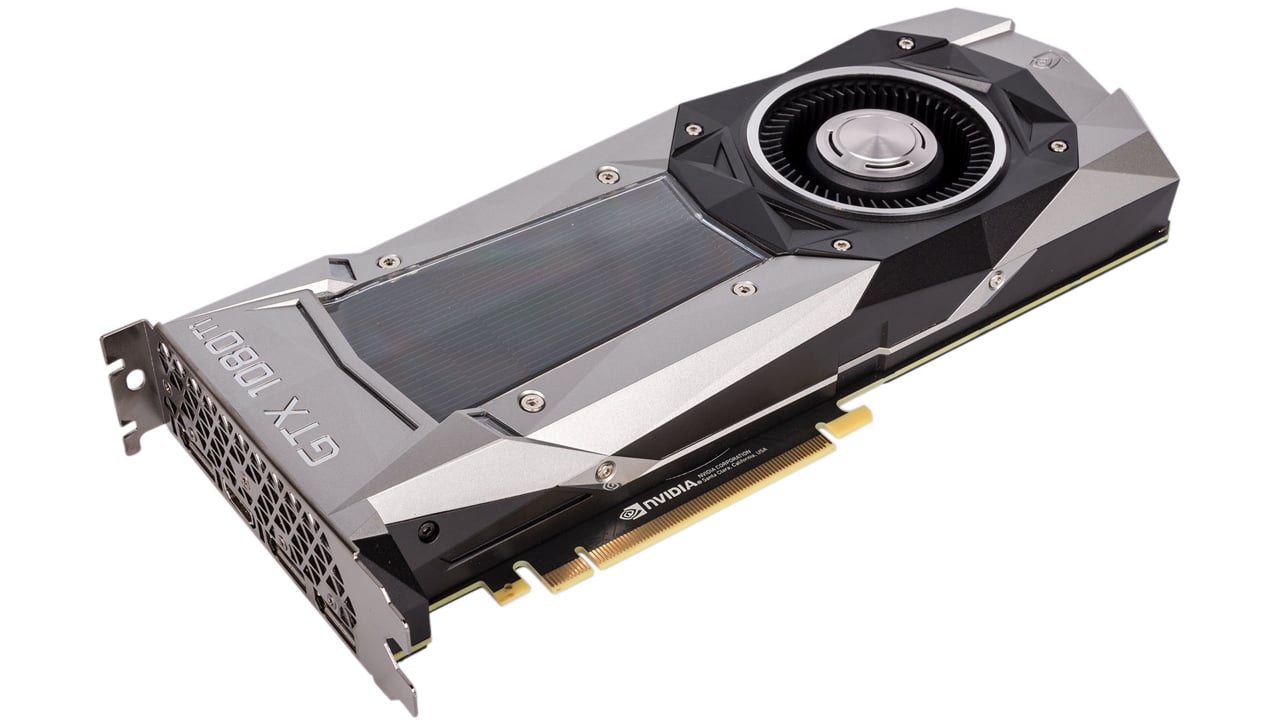 Nvidia's GTX 1080 Ti: a peach just but a minor boost over the not-Ti version
 Choices, choices...
Over at AMD
Tags: Technology

Source: https://www.redsharknews.com/technology-computing/item/5125-2017-state-of-the-art-pc-graphics
0 Response to "Why You Would Need State of the Art Graphics Card?"
Post a Comment